
By Chuck Woodbury
Here are a few things I have learned about finding a good campsite after years of traveling with my RV, often learning the hard way.
1. First, the obvious: Be sure the site is level or close to it, and long enough so your RV (and tow or towed vehicle) doesn’t stick out in the road (bumps in the night are not good).
2. Pay careful attention before pulling into a campsite to be sure you can clear tree branches above and beside your RV. Scratches (or worse) are not your friend.
3. Check the power pedestal before pulling in or immediately thereafter before leveling up. Be sure it works and is safe (if not, you could get shocked by your RV – or worse!). If it shows excessive wear and tear, move to another site.
4. Check the position of the water hookup. Will your hose reach? Ditto the sewer disposal.
5. If you choose a campsite on a curve in the park road, choose a site on the inside of it to avoid headlights of passing campers after dark.
6. Never park under a tree with ripe berries or other fruit. They will drop on your roof and stain it.
7. Avoid parking under pine trees that drop sap. Sap is no fun to remove. If there are pine cones, be aware that squirrels may chew them and then drop them when finished (right on your roof with a loud thud!).
8. Before choosing a site, check to see if the ground is covered with bird poop. If so, then birds likely roost at night in the tree above. Unless you’re into a slimy, poopy roof, choose another campsite.
9. If the daytime temperature is really cold or really hot, choose a campsite that will either provide lots of sunshine or a minimum of it. In hot weather, it’s a good idea to position the RV so its refrigerator gets the least amount of heat (as in sunshine). If you have a pet you may need to leave alone for brief times in the summer, park where the RV is shaded in the afternoon.
10. If it’s windy, choose a site where the front or back of the RV points into the wind. You’ll experience a lot less rockin’ and rollin’ from wind and wind gusts that way.
11. If you have kids and/or love kids, then parking near the playground or pool might be fun. But if you prefer peace and quiet to screaming kids, you might want to choose a site across the park.
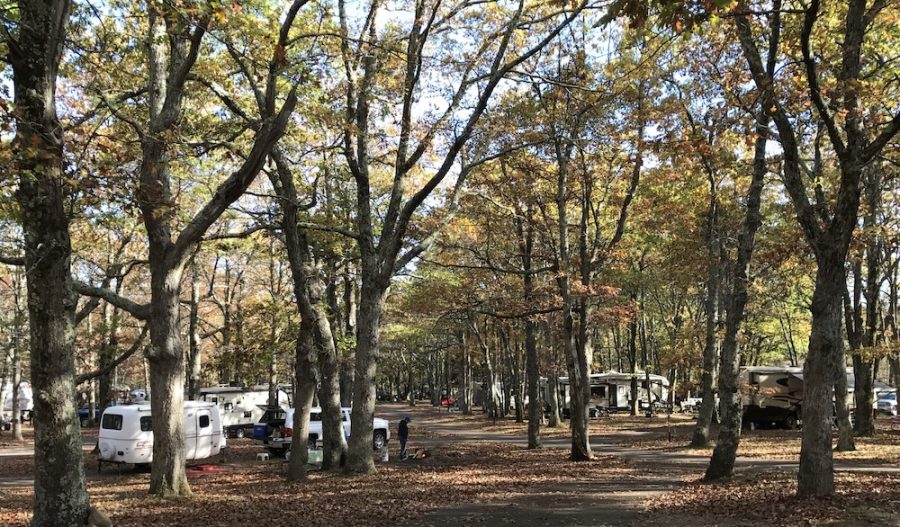
12. In the fall, if your campsite is under deciduous trees, be prepared to climb onto your roof before you leave to brush leaves off your roof and slides.
13. If you plan to use the park’s WiFi (or your own device) to connect to the Internet, check the strength of the signal before settling into a site. Reception may be strong in one area of a park and useless in another. Ditto for TV if using an antenna.
14. Check out your neighbor’s site before setting up: If there’s a boombox and lots of beer cans visible, you may wish to move farther away if you treasure quiet time.
15. If you plan to sleep late in the morning, be sure to park a distance away from any dumpsters, which crews may bang around when dumping, commonly early in the morning.
16. If there’s a long line of high bushes next to or at the back of your campsite, look behind the bushes for train tracks. If you love the sound of trains, stay. If not, move.
17. If there’s a tavern within walking distance of your campsite, be aware that there could be some noise around 2 a.m., when patrons might bring their party back to the park.
18. In the tourist season, when looking for a campsite without a reservation, pick one away from popular destinations, which will be in biggest demand. Move to those popular places on a Sunday afternoon when most of the weekend campers have headed home.
19. To avoid noise from passing RVs and cars, choose a campsite near the back of the park rather than near the entrance.
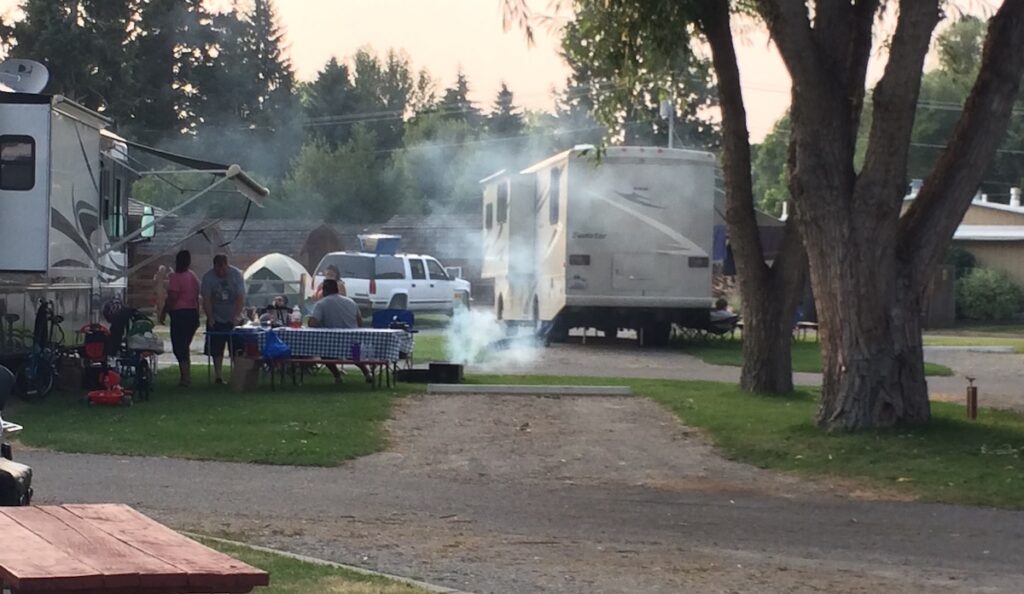
20. If campfire smoke bothers you, check the location of your neighbor’s fire pit. It could literally be 10 or 15 feet away. If so, your RV may fill with smoke when the wind is blowing your way.
21. Always ask when registering if any discounts are available – Good Sam, Escapees, FMCA, AAA, AARP, Passport America, military or veterans rate, etc.
22. Check with Google Earth or Maps before you choose your campground to learn what attractions are nearby that you might be easily able to walk or bike to.
Do you have a tip to add to this list? Please leave it below.
Chuck Woodbury is the founder and publisher of RVtravel.com.