
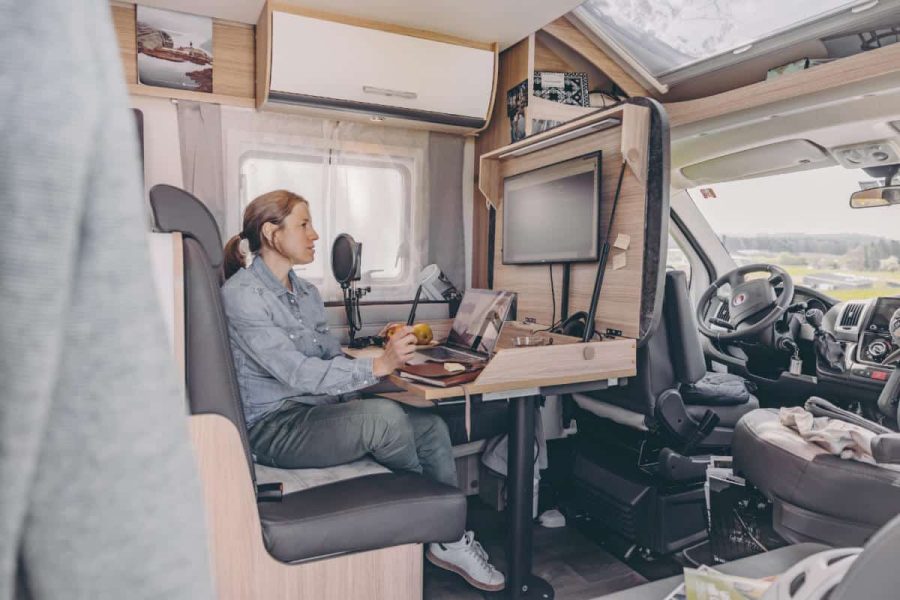
For most RVers, having access to reliable internet is more important than ever. Whether working remotely, streaming entertainment, keeping in touch with family, or managing navigation apps, reliable internet access has become an essential part of an RVing life. Yet, getting strong, consistent service while traveling across varying terrains and remote areas is still a challenge. Here’s a general overview of options.
Table of Contents
ToggleMobile Hotspots and Cellular Data Plans
For most RVers, cellular data is the mainstay of their internet connection. Mobile hotspots—small devices that create a Wi-Fi network using a cell signal—are portable, powerful, and easy to set up. Many travelers use a dedicated hotspot from a carrier like Verizon, AT&T, or T-Mobile, while others simply tether their smartphones to share a data connection with laptops or smart TVs. For light users, the last option may be the easiest and most affordable.
When choosing a plan, look for one that offers high data caps or unlimited data, though be aware that “unlimited” often comes with reduced speeds after a certain threshold. Coverage maps are also key—Verizon tends to perform best in rural areas, while T-Mobile often offers better speeds in cities and along interstates.
Cellular Boosters and Antennas
Even the best cellular plan won’t help much if you’re parked where a cell signal is weak, which is a common situation for most RVers who spend their time in rural areas. That’s where cellular boosters come in. These devices amplify faint signals from nearby towers, improving both speed and reliability. Pairing a booster with an external antenna mounted on your RV roof can significantly enhance reception.
Starlink and Satellite Internet
Perhaps the biggest game-changer in RV connectivity has been Starlink, the satellite internet service from SpaceX. Using a small dish and modem, Starlink connects directly to low-orbit satellites, offering broadband-level speeds almost anywhere with a clear view of the sky.
For RVers, the Starlink Roam plan allows for service across North America without being tied to a single address. It’s especially popular among remote workers and full-timers who venture far beyond cell coverage. Download speeds typically range from 50–150 Mbps which is fast enough for streaming, Zoom calls, and large file uploads. Starlink offers various options and adds new one often, so explore the company’s website for what might work best for you.
Campground Wi-Fi: Manage Expectations
Many RV parks and campgrounds advertise “free Wi-Fi,” but veteran RVers know the service is very so slow or sporadic that it’s almost useless. In most cases, campground Wi-Fi is shared among dozens—or hundreds—of users, leading to slow speeds during peak hours. For RVers who rely on campground Wifi is best to ask when checking in about best areas of the park for good cell reception.
Combining Multiple Options
Many full-time RVers mix and match technologies: a Starlink system for remote boondocking, a cellular hotspot for travel days, and campground Wi-Fi when it happens to work well. This flexibility ensures you’re covered in nearly every situation.